BitMart at a glance
- Founded
- 2017
- Headquarters
- Cayman Islands
- Spot fees (maker / taker)
- 0.10% / 0.10%
- Listed assets
- 1,500+
- Derivatives
- Yes
- Fiat support
- Limited
- Proof of reserves
- Yes
- Licences and registrations
- US MSB registration; offshore incorporation
- Official website
- bitmart.com
BitMart review 2027: a small-cap marketplace
BitMart was founded in 2017 by Sheldon Xia and opened for trading in 2018. It is incorporated in the Cayman Islands and has long run a significant part of its operations from the United States. The exchange has never competed with the giants on liquidity in bitcoin or ether. Its niche is breadth at the speculative end of the market: with roughly 1,500 or more listed tokens, it is one of the places where very small and very new projects can be bought through an ordinary exchange account. That is its appeal in 2027, and also the source of most of its risk.
Listings and the kind of tokens you find
New coins arrive on BitMart continually, often within days of launch, and many are not available on any top-ten exchange. Meme coins, micro-cap gaming tokens and projects from emerging blockchains make up a large share of the catalogue. The exchange earns listing-related income and applies lighter screening than conservative platforms. Users should assume nothing about a token's quality from its presence here. Order books on the smallest pairs are thin, spreads are wide and prices can collapse quickly, so limit orders and small position sizes are essential.
Products beyond spot
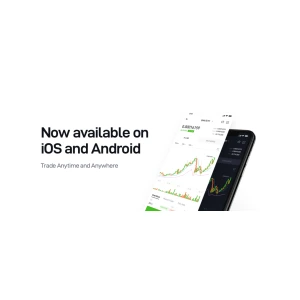
BitMart offers USDT-margined perpetual futures with leverage up to 100 times on selected pairs, copy trading, margin trading, a launchpad, staking and savings products, and fiat on-ramps through third-party payment providers that accept cards and bank transfers. A separate institutional service provides API connectivity and market-maker programmes. The mobile app covers the full feature set and is the way most customers use the platform.
Fees
Fees depend on the class of token. The most liquid assets start at around 0.10% for makers and takers, while smaller and riskier tokens are charged more, in some classes as much as 0.40% to 0.60% per side. Holding BMX, the exchange's token, earns a discount, and higher volume tiers reduce rates further. Futures cost about 0.02% for makers and 0.06% for takers. Because much of the trading here happens in higher-fee classes, the real cost for a typical small-cap trader is above the headline rate.
The December 2021 hack
BitMart's most serious incident came in December 2021, when a stolen private key allowed attackers to empty two hot wallets on Ethereum and BNB Chain. Estimates put the loss between $150 million and nearly $200 million. The company announced that it would compensate users from its own funds and gradually reopened withdrawals. Reimbursement was not immediate for every asset, however, and some customers reported waiting a long time for specific tokens to be restored. The episode remains the main reason reviewers mark the exchange down on security.
Regulation
BitMart is registered with FinCEN in the United States as a money services business and has held state-level licences, while tightening access for American customers in certain states. An MSB registration is an anti-money-laundering requirement, and it should not be read as an endorsement of the platform's safety. The exchange has registrations in a small number of other jurisdictions and lacks authorisation from major regulators such as the FCA or an EU authority under MiCA. Service is unavailable in several countries, and identity verification is required for full access.
Reserves and safety measures
After the hack, BitMart moved more assets to cold storage, engaged outside security firms and began publishing proof-of-reserves data showing customer balances backed at or above 100% for major coins. Two-factor authentication, withdrawal whitelists and anti-phishing codes are available. The exchange also labels high-risk tokens and periodically delists inactive ones, which gives some warning but no protection against losses.
Strengths and weaknesses
- Access: a very wide range of small and newly launched tokens.
- Convenience: card and bank purchases through integrated providers.
- Features: futures, copy trading and earn products in one app.
- Security history: a large hack in 2021 with slow restoration for some users.
- Costs: elevated fees on lower-liquidity token classes.
- Liquidity: thin order books outside the major pairs.
Who should consider BitMart?
BitMart is a tool for experienced speculators who want a particular small token that is not listed on larger venues and who understand they may lose the whole stake. It is not a suitable primary exchange for beginners or a place to store savings.
Verdict
BitMart fills a real gap by listing what bigger exchanges will not. For 2027, the sensible way to use it is narrowly: deposit what you need for a specific trade, use limit orders, and withdraw afterwards. Its past security failure and limited oversight argue against keeping meaningful balances on the platform.
BitMart review: compare the alternatives
This BitMart review is part of our Top 45 Cryptocurrency Exchanges in 2027 ranking. To compare, read the LBank review and the BingX review.
Compare with nearby crypto exchanges
 BingXRank #17 · Singapore
- Maker / taker fee
- 0.10% / 0.10%
- Listed assets
- 900+
 LBankRank #19 · British Virgin Islands
- Maker / taker fee
- 0.10% / 0.10%
- Listed assets
- 800+
 WhiteBITRank #20 · Vilnius, Lithuania
- Maker / taker fee
- 0.10% / 0.10%
- Listed assets
- 330+
Live markets and charts
BitMart trading volume, last 30 days
Reported volume in BTC. Source: CoinGecko.
Live markets
Crypto
Forex
Crypto prices by CoinGecko. Forex figures are European Central Bank reference rates, updated once a day. The ticker is provided by TradingView.
Live crypto indicators
Daily closes, 120 days. RSI above 70 is conventionally read as overbought and below 30 as oversold. Indicators describe past prices and are not a forecast.
Risk warning: trading forex, CFDs, futures and crypto assets carries a high risk of losing money. This review is general information, not investment advice.