










Top Rated Forex No-Deposit Bonuses With Instant Rewards for 2027
A forex no-deposit bonus lets you open a live trading account and start with broker-funded credit, so you can trade without putting your own money down. For new traders, that instant reward matters because it lowers the pressure, gives you real market exposure, and helps you see how a broker's platform works before you commit.
These offers are common marketing tools from regulated brokers that want new clients, but the best ones come with clear terms and a fair shot at withdrawing profits. This guide will help you spot the top rated bonuses, judge which offers are worth your time, and avoid the fine print that can turn a free start into a frustrating one.
What a forex no-deposit bonus really gives you
A forex no-deposit bonus gives you a live trading start without an upfront deposit. That sounds simple, but the real value is more specific: you get broker-funded credit, real market exposure, and a chance to test the platform under live conditions.
It is also a different experience from a demo account. A demo lets you practice with fake money, while a no-deposit bonus puts real capital on a live account. That means the prices move in real time, the pressure feels real, and your trade decisions matter.
How instant rewards work after signup
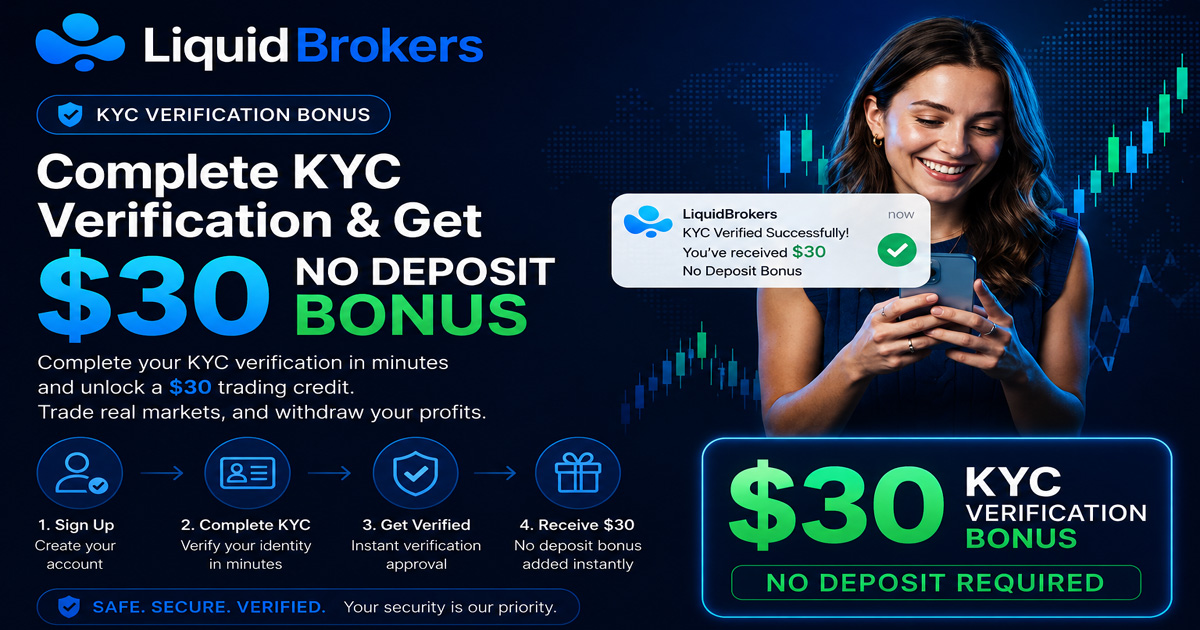
The usual flow is straightforward. You register with a broker, confirm your details, and then the bonus appears in your account. Some brokers credit it right after signup, while others ask for email confirmation, phone verification, or full KYC first.
That verification step is common because the broker wants to know the account is genuine. In many cases, you will need to submit ID documents before the bonus becomes active. Once approved, you can open trades with the bonus balance just like you would with your own funds.
The size of the offer also varies a lot. Small bonuses often fall in the $10 to $50 range, which is enough to test a strategy or feel out the platform. Bigger offers can look more exciting, but they usually come with tighter limits, such as trading volume rules, time limits, or profit caps.
A simple way to think about it is this:
- Small bonuses are easier to claim and easier to test.
- Larger bonuses can give more room to trade, but they often bring stricter conditions.
- Withdrawable profits may be possible, but the bonus itself is usually not cash you can take out.
The bonus is rarely the prize. The real value is what you can learn, and whether the broker lets you keep any profits you earn.
Why brokers offer free trading credit
Brokers do not hand out free credit by accident. They use no-deposit bonuses to attract new traders, get more account openings, and give people a reason to try the platform. It is a simple marketing move, but it can be effective because it lowers the barrier to entry.
For regulated brokers, the offer can also help build trust. A trader who can try live trading without a deposit may feel more comfortable opening an account, especially if the platform is new to them. It also gives the broker a chance to show how smooth its order flow, charts, and trade tools really are.
That does not mean every offer is worth claiming. Some bonuses are tied to narrow terms, specific account types, or country restrictions. Before you accept one, check the rules carefully so you know what the credit can and cannot do.
In plain terms, the broker gets exposure, and you get a low-risk way to test the waters. If the terms are fair, both sides can benefit.
How to spot a top rated offer instead of a risky one
A strong forex no-deposit bonus feels clear, fair, and easy to verify. A risky one often hides behind a flashy number and vague rules. Before you claim anything, check the broker, the terms, and the way withdrawals work.
Check the broker's regulation first
Regulation should come before bonus size. A broker overseen by a known authority is usually a safer place to test a promotion than an unknown brand with loose promises. That matters because the regulator sets standards for how the broker handles client money, account checks, and disputes.
Look for names you recognize, such as the NFA and CFTC in the US, FCA in the UK, ASIC in Australia, and CySEC in Europe. A broker with this kind of oversight is easier to trust than one that only talks about big rewards. If a site gives you a large bonus but no clear license details, that is a warning sign.
Regulation does not make every offer perfect, but it does give you a layer of protection. It also usually means the broker has a real process for KYC checks, AML rules, and complaint handling. That is a better starting point than a promotion from a brand you have never heard of.
Read the fine print before you claim anything
The terms decide whether a bonus is useful or frustrating. Many traders run into problems because they skip this part and focus only on the headline offer. That usually leads to missed deadlines, blocked withdrawals, or a bonus that disappears before it can help.
Pay close attention to rules like:
- Time limits, which tell you how long you have to trade before the offer expires
- Lot requirements, which can set a minimum trading volume before profits become withdrawable
- Max profit caps, which limit how much you can cash out from the bonus
- Country restrictions, which can block traders in certain regions
- Eligibility rules, since some offers are only for new clients
- Verification steps, such as email, phone, or full identity checks
- Platform or account limits, since some bonuses only work on certain account types or trading platforms
A promotion can look generous and still be hard to use. For example, one broker may allow a simple sign-up bonus, while another may require extra verification and a specific account setup. If the rules feel unclear, that is usually the wrong offer to chase.
The cleanest bonus terms are the ones you can understand in a few minutes without guessing.
Look at trust signals beyond the bonus size
A bigger bonus is not always a better deal. In many cases, a smaller offer from a reliable broker is worth more than a large one from a weak brand. You want a broker that gives you a fair trading experience, not just a large starting figure.
Compare the details that affect real use:
Trust signal What to look for Broker reviews Consistent feedback on account setup, support, and payouts Platform quality A stable platform that is easy to use on desktop and mobile Execution speed Orders that open and close without obvious delays Spread levels Trading costs that stay reasonable during normal market hours Payout history Evidence that eligible profits have actually been paid A broker with decent spreads, quick execution, and a solid reputation often gives you more value than a flashy promo with heavy restrictions. The same goes for device support. If you plan to trade on your phone, the mobile app matters just as much as the bonus.
The best move is to compare offers side by side and ask a simple question: can I use this bonus without fighting the rules? If the answer is yes, the offer may be worth your time. If the answer is unclear, keep looking.
Popular no-deposit bonus types traders see in 2027
No-deposit bonuses still follow a familiar pattern in 2027, but the details vary more than many traders expect. Some offers are simple welcome credits, some come with larger balances and stricter rules, and others only appear for certain regions or short campaigns.
That variety matters. A $30 bonus from one broker can be easier to use than a $100 bonus from another if the withdrawal rules are lighter and the verification process is cleaner.
Welcome bonuses with real trading credit
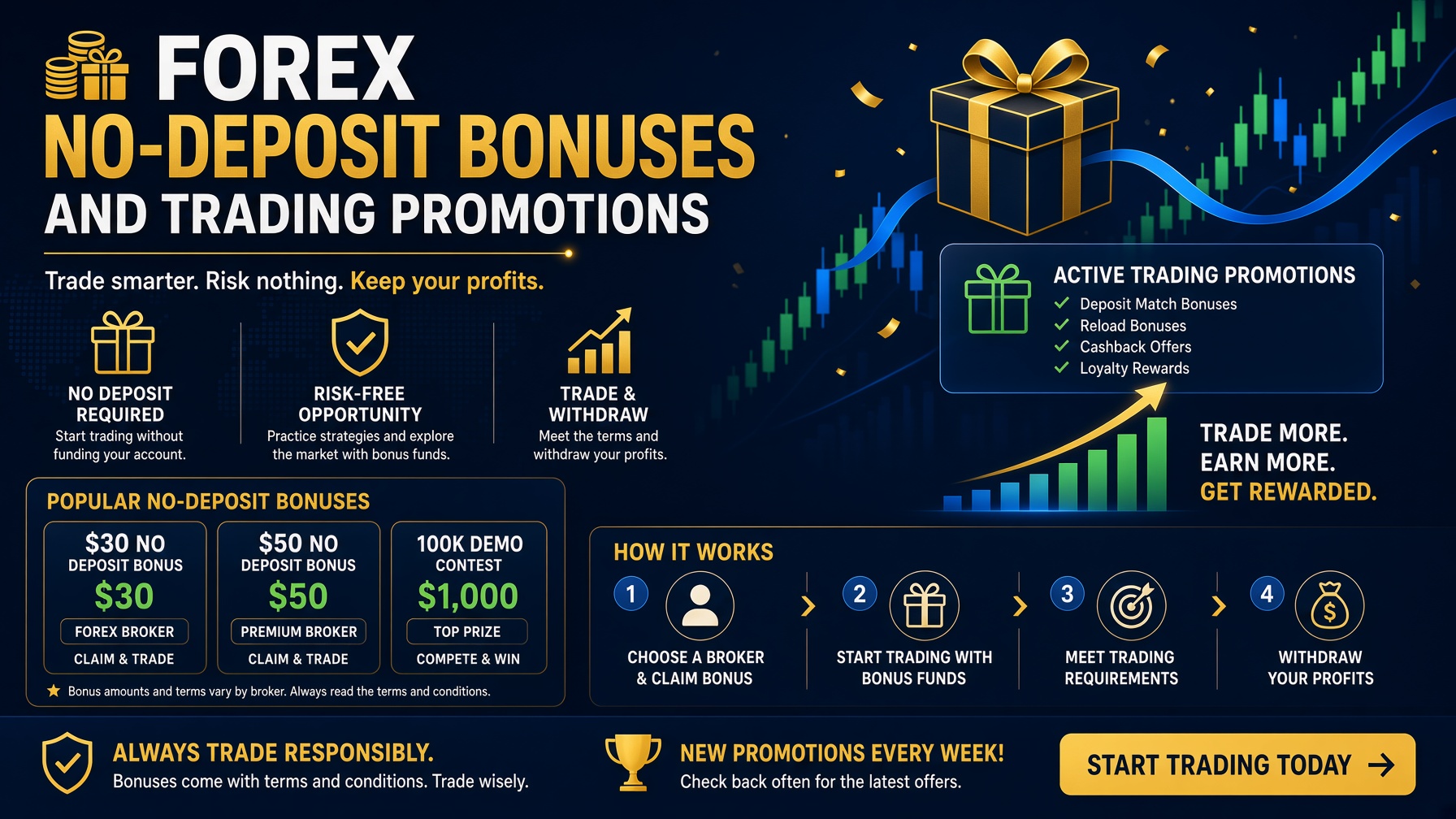
The most common offer in 2027 is the standard welcome bonus, usually in the $30, $50, or $100 range. Brokers like XM, Tickmill, Trading.com, and several others use these promotions to give new traders live market access without an upfront deposit.
These bonuses appeal to beginners because they lower the first step. You can open trades, test the platform, and get a feel for real price movement before risking your own cash. In many cases, the broker also lets you keep profits if you meet the turnover or volume rules.
A few practical examples show how this works in the market:
- XM has offered a $50 no-deposit bonus to verified new clients.
- Tickmill has run a $30 welcome account for non-EU traders.
- Trading.com has promoted a $100 no-deposit bonus with free trading credit.
- Windsor Brokers, WM Markets, and similar brands also use smaller welcome credits to attract first-time users.
The appeal is simple, but the rules still matter. Some brokers only pay out profits after you reach a set trade volume, and others cap the amount you can withdraw from the bonus account. If you want a fair shot, the best welcome offers are the ones that explain the path to withdrawal in plain language.
A small bonus with clear rules often beats a bigger credit with hidden friction.
Bigger bonuses that come with tighter rules
Larger no-deposit offers are easy to notice because they sound generous right away. In 2027, traders still see promotions like Headway's $111 or $150 offers, InstaForex's larger startup bonuses, Kato Prime's $333 bonus, and xChief's $100 credit. These can look much more attractive than a standard $30 offer.
The trade-off is clear. Bigger bonuses usually come with more conditions, such as a shorter claim window, a stricter verification process, or a higher trading volume target before profits can be withdrawn. Some also limit the bonus to certain account types or only allow it on specific platforms like MT4 or MT5.
That does not make them bad offers. It just means the size of the credit is only one part of the story. A trader who wants to test a strategy may prefer a smaller bonus that is easier to unlock, while someone with more experience may be comfortable working through the extra rules.
Before you chase the biggest number, compare the details that shape the real value:
- The time limit for using the credit.
- The number of lots or trades required for profit withdrawal.
- Any profit cap tied to the promotion.
- Whether the bonus is valid on your preferred account type.
- The countries that are allowed to join.
Big credits can be useful, but they are rarely free in the simple sense. The more the bonus gives, the more it usually asks back in trading activity.
Region based and campaign based bonuses
A growing share of 2027 promotions are tied to location. Brokers often run special offers for traders in South Asia, Malaysia, Indonesia, Sri Lanka, Japan, and Arabic markets, and those deals can look very different from the global welcome bonuses. A trader in one country might see a $30 credit, while another region gets a $100 or even higher offer.
Some brokers also release short-term campaign bonuses that depend on participation. Social media promotions, quiz contests, and special event offers are common examples. Phemex, for instance, has run social campaign rewards, while other brokers have used quiz-based bonus checks or sign-up promos with limited entry rules.
These offers can be useful, but eligibility is the first thing to check. A bonus may sound generous on a promotional page and still be unavailable in your country. In other cases, the offer may be open only to new users, inactive accounts, or the first group of traders who sign up during the campaign period.
A few region-based examples include:
- Valetax has offered a $30 bonus for traders in South Asia.
- NXG Markets has promoted a bonus for traders in Sri Lanka.
- FreshForex has had an Indonesia-specific no-deposit offer.
- FXON has listed a bonus for Japanese clients.
- PrimeX Capital and OXShare have run Ramadan-themed promotions for eligible users.
These offers can move fast, so the timing matters as much as the amount. If you see a region-specific deal, check the country list, the start and end dates, and the withdrawal rules before you sign up. The best bonus is the one you can actually claim, use, and understand without guesswork.
The best way to claim and use a bonus without losing it
The safest way to use a forex no-deposit bonus is to treat it like a real trading account from day one. That means setting up the account properly, keeping risk low, and checking the withdrawal rules before you place a trade. The goal is simple: keep the bonus active long enough to learn something useful, then give yourself a real shot at withdrawing any profits.
Set up your account the right way
Start with the broker, then follow the registration steps exactly as asked. Use your real name, a matching email address, and a phone number you can access, because many brokers use those details to verify the account before they add the bonus.
After signup, complete every check the broker requests. Some platforms credit the bonus after email confirmation, while others require phone verification or document checks first. A valid ID and proof of address are common, especially with regulated brokers that follow KYC and AML rules.
A small mistake can slow everything down. If your name, address, or account type does not match the broker's records, the bonus can be delayed, denied, or removed. Some brokers also require a specific base currency or account setup, so read the bonus page before you click through.
A simple launch process looks like this:
- Choose a regulated broker with clear bonus terms.
- Register with accurate personal details.
- Finish email, phone, and identity checks.
- Confirm the bonus is active before you trade.
If the bonus is not visible in your live account, do not assume it will appear later. Check the activation rules first.
Trade small and protect the bonus balance
Once the funds land, keep your position size small. A bonus may feel like free money, but a few oversized trades can wipe it out fast. That is especially true if the spread widens or the market moves against you right after entry.
A better approach is to use the bonus as training capital. Open fewer trades, stick to simple setups, and avoid the urge to chase every move on the chart. Overtrading is one of the fastest ways to burn through a small account, bonus or not.
A basic rule helps here, keep the focus on learning first and profit second. If you can control risk on a small bonus, you build habits that help later when real money is on the line. For beginners, that is usually more valuable than a lucky win on day one.
Keep these habits in mind:
- Use the smallest practical lot size.
- Risk a small share of the balance on each trade.
- Avoid stacking too many open positions.
- Stop trading after a few bad decisions.
- Review what happened before you place the next trade.
The bonus lasts longer when you trade with discipline. That gives you more time to test the platform, read price action, and learn how the broker handles execution.
Know the withdrawal path before you start trading
Do not trade first and read the withdrawal rules later. Many brokers require a minimum number of lots, a trading deadline, or both before profits become withdrawable. Some also cap the amount you can cash out, even if your trades go well.
In most cases, the bonus itself is not cash you can withdraw. You can usually withdraw profits only, and even that depends on the terms. Some brokers allow profit withdrawals after you meet the activity target, while others require a deposit before any funds can leave the account.
That difference matters. A bonus that looks simple on the surface can turn into a dead end if you miss the turnover rule or let the time limit expire. Before you trade, check whether the broker wants:
- Only profit withdrawals after trading requirements are met.
- A deposit before any withdrawal request.
- A profit cap tied to the promotional credit.
- A short time window for completing the required volume.
If the offer needs a deposit later, decide early whether that still fits your plan. The best way to protect the reward is to know the exit path before you enter the first trade.
How to compare top rated brokers side by side
When several brokers look good, side-by-side comparison makes the choice much easier. The goal is not to find the biggest headline bonus, it is to find the offer that gives you the most usable value with the least friction.
A quick comparison should focus on what you can actually use. That means checking how much trading credit you get, what you must do to keep it, and how long the offer stays active. It also helps to match the broker's platform and market access to your own trading style.
Compare bonus size, trading rules, and expiry dates
A larger bonus can look better on paper, but that does not mean it gives you more value. A $100 bonus with a high turnover target and a short expiry date may be harder to use than a $30 bonus with lighter rules. That is why the real comparison starts with the terms, not the number.
Focus on four parts of the offer: profit caps, turnover requirements, expiry dates, and platform limits. If one broker lets you withdraw a small share of profits with simple rules, while another sets strict lot targets, the smaller bonus can be the smarter pick. A bonus that fits your trading pace is often more useful than a bigger one that expires before you can meet the conditions.
A simple comparison table can help you spot the difference fast:
What to compare Why it matters Bonus size Shows how much trading credit you get at signup Profit cap Limits how much you can cash out from the bonus Turnover requirement Tells you how much trading activity you need before withdrawal Expiry date Shows how long you have to use the offer Account or platform restrictions Reveals whether the bonus works on MT4, MT5, WebTrader, or a specific account type Use the table as a filter, not a final decision. A smaller bonus with clear withdrawal rules and enough time to trade may give you a better shot at real value. A bigger bonus with tight limits can feel generous and still be hard to use.
The best offer is the one you can trade through without guessing what comes next.
Review platforms, tools, and market access
The platform matters just as much as the bonus. If you like desktop trading, MT4 or MT5 may be the best fit. If you want quick access without downloads, WebTrader can be easier. For traders who move between devices, a strong mobile app matters because it keeps you connected when you are away from your desk.
Also check the tools that come with the account. Some brokers include economic calendars, calculators, copy trading, and charting tools that help beginners make better decisions. Others give access to a wider mix of markets, including forex, metals, indices, stocks, and crypto, which matters if you want to test more than one product.
A good side-by-side check is simple:
- MT4 or MT5 if you want familiar charting and order tools.
- WebTrader if you want to trade from a browser.
- Mobile app if you need flexibility during the day.
- Extra tools if you want help with timing, risk, or trade ideas.
- Broader market access if you plan to test more than currency pairs.
The right platform can make a modest bonus feel more useful. If the broker gives you the tools you already use, you spend less time adjusting and more time trading.
Conclusion
Top rated forex no-deposit bonuses with instant rewards can be a smart way to try live trading without putting your own cash at risk. They work best when the broker is regulated, the terms are clear, and the withdrawal rules are realistic.
For beginners, the real value is not the free credit alone. It is the chance to learn how live markets move, practice careful trade sizing, and see how the platform handles real orders.
Compare offers side by side, then read the terms before you sign up. That simple step can save you from the wrong bonus and help you pick one that actually fits your trading plan.










(0) Comments